Reverse convertibles · barrier structures
Reverse Convertible Analysis Tool
A reverse convertible pays an attractive coupon because the investor is short a put. The useful analysis is not the coupon; it is how often that short put finishes in the money and how much it costs when it does.
No login required · Independent, issuer-neutral analysis
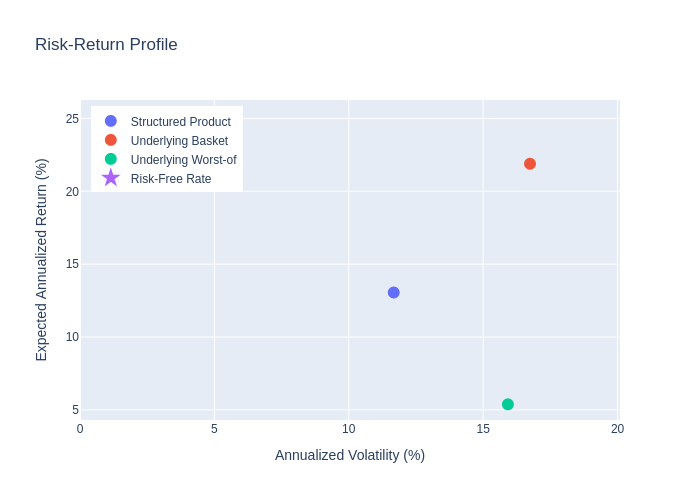
Chart from a real Speval analysis report.
Example reverse convertible analysis
10.75%
Annual coupon
Paid semi-annually
13.05%
Expected annualized return
Simulated
17.80%
Probability of loss
After coupons
21.72%
Principal loss probability
Barrier hit
A reverse convertible pays a high coupon because the investor is effectively short a put option on the underlying. If the underlying holds up, the investor collects the coupon and gets principal back. If it falls far enough, the investor takes the downside — sometimes by receiving the underlying asset, sometimes through a reduced cash payment.
The coupon is the visible part. The short put is the part that determines whether the trade was a good idea. A reverse convertible analysis tool should price the put, not just quote the coupon.
What is a reverse convertible?
A classic reverse convertible has three features:
- A coupon. Usually higher than a comparable bond, because it compensates for the equity risk.
- A maturity payoff tied to the underlying. If the underlying is above a specified level at maturity, principal is returned. If it is below, the investor may receive the underlying or a cash amount based on its value.
- A term. Typically one to three years, sometimes with early-redemption features.
The investor is long a bond and short a put. The coupon is the premium for selling the put, plus the bond yield. When the put finishes in the money, the loss can exceed the coupon.
Barrier reverse convertibles
A barrier reverse convertible adds a knock-in barrier. The barrier changes the payoff in two ways:
- If the barrier is never breached, principal is typically returned in full, even if the underlying finishes below its starting level. The investor keeps the coupon.
- If the barrier is breached, the note converts into the underlying's downside, often based on the worst-performing name in a basket.
The barrier is usually observed continuously or on closing prices. Continuous observation triggers more often, because an intraday breach counts even if the underlying recovers by the close. That detail belongs in the analysis, not the footnote.
Worked example: UBS 10.75% CHF Autocall Barrier Reverse Convertible
Speval's example report analyzes a UBS-issued 10.75% p.a. CHF autocall barrier reverse convertible linked to a worst-of basket of Bayer AG, EMS-CHEMIE Holding AG, and Lonza Group AG. The note pays a 10.75% annual coupon semi-annually, can autocall from around month six if all three names are at or above their initial levels, and has a continuous 60% knock-in barrier on each name. It is quanto CHF, so the FX exposure is removed.
The simulation produced:
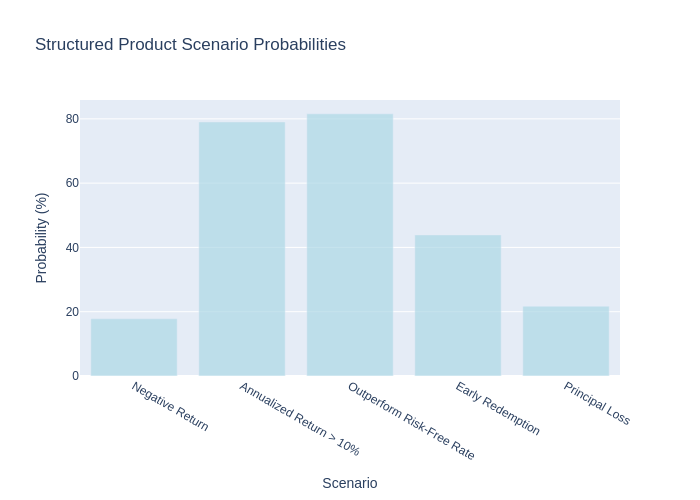
- 13.05% expected annualized return — above the 10.75% coupon, because some paths benefit from early redemption and the simulated coupon stream.
- 17.80% probability of a negative total return — after accounting for coupons.
- 21.72% probability of a principal loss — higher than the negative-return probability because coupons can offset small principal losses.
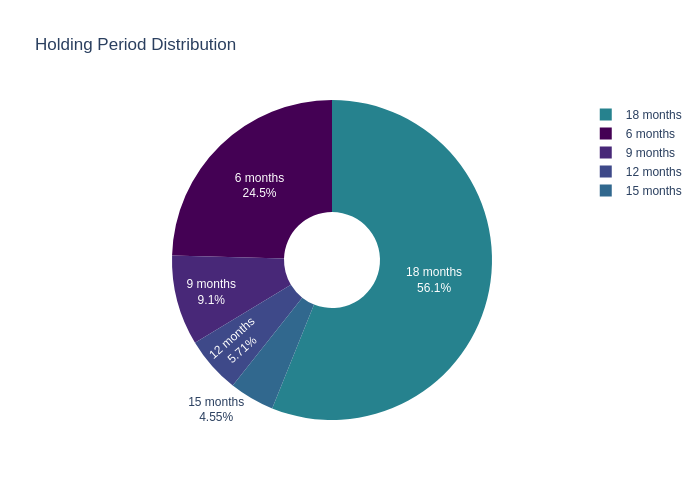
- 43.90% early redemption probability — the note is called in a large share of paths.
- 13.8 months expected holding period — shorter than the stated term.
- -21.45% 99% VaR — the tail loss in the worst 1% of paths.
The gap between 17.80% and 21.72% is one of the most useful things the analysis shows. A note can lose principal and still produce a positive total return after coupons. It can also produce a negative total return without a principal loss. The two measures answer different questions.
Coupon vs risk
A 10.75% coupon on a note with a 60% barrier and a worst-of basket is not comparable to a 10.75% coupon on a single-name note with a 50% barrier. The coupon reflects:
- The level and observation style of the barrier.
- The volatility and correlation of the underlying basket.
- The autocall feature and the expected holding period.
- The issuer's credit spread and the note's fees.
To compare two reverse convertibles, compare the probability of loss, the principal loss probability, the 99% VaR, and the expected holding period — not the coupon.
Probability of loss vs principal loss probability
These two numbers are often confused:
- Probability of loss is the share of paths where the total payoff, including coupons, is below the amount invested.
- Principal loss probability is the share of paths where the maturity principal is below par, regardless of coupons.
A note with a high coupon can have a relatively low probability of negative total return and a higher probability of principal loss. That is not a contradiction; it is the coupon doing its job in some paths and not in others. The report should show both.
What to check in a reverse convertible term sheet
- Barrier level and observation style. Continuous vs closing vs maturity-only.
- Worst-of or single-name. A basket increases the coupon and the correlation risk.
- Autocall triggers and observation dates. Early redemption changes the holding period and the coupon earned.
- Coupon conditions. Is the coupon unconditional, conditional, or memory-linked?
- Settlement. Cash or physical delivery; how the final price is determined.
- Currency. Quanto or non-quanto; whether FX risk is borne by the investor.
- Issuer credit. The coupon is only as good as the issuer.
Related analysis
- Autocallable notes analysis tool for the autocall feature.
- Worst-of notes analysis tool for basket-linked structures.
- Structured notes analysis tool for the broader category.
- Structured product calculator for quick coupon and barrier math.
Figures in this article come from a Speval example report and are simulated, not investment advice.
Example reverse convertible analysis
UBS 10.75% p.a. CHF Autocall Barrier Reverse Convertible
This is a full report generated by Speval from a real term sheet. The same analysis is available for your product — upload the document and get the report in minutes.
Frequently asked questions
What is a reverse convertible?
A reverse convertible is a note that pays a coupon and, at maturity, may deliver the underlying asset or a reduced cash amount if the underlying has fallen below a specified level. Economically, the investor is long a bond and short a put option.
What is a barrier reverse convertible?
A barrier reverse convertible adds a knock-in barrier. If the underlying never breaches the barrier, principal is typically returned in full even if the underlying finishes below its starting level. If the barrier is breached, the note converts into the underlying's downside.
How do you analyze a reverse convertible?
Model the coupon, the barrier observation style (continuous or closing), the worst-of basket if applicable, and the maturity payoff across thousands of paths. Report probability of loss, principal loss probability, expected holding period, and the distribution of returns.
Why is the probability of loss higher than the probability of principal loss?
Coupon income can offset a small principal reduction. A note can produce a negative total return without a principal loss, and it can also lose principal while still having paid coupons. The two measures answer different questions.
Is a reverse convertible the same as an autocallable?
No, but they are often combined. A reverse convertible focuses on the maturity conversion risk; an autocallable adds early-redemption triggers. Many retail notes are autocallable barrier reverse convertibles, which combine both features.
What is worst-of exposure in a reverse convertible?
If the note is linked to a basket, the payoff may depend on the worst-performing underlying. Correlation between the basket members drives the risk: lower correlation can increase the chance that at least one name breaches the barrier.
Related analysis tools
Further reading
Run this analysis on your own term sheet
Upload a PDF, Excel, or Word term sheet. Speval extracts the terms, runs 10,000 Monte Carlo paths, and returns autocall probability, probability of loss, expected return, and scenario charts.