What Is a Market-Linked Note and How Do You Evaluate One?
What Is a Market-Linked Note and How Do You Evaluate One?
A Market-Linked Note (MLN) is a structured product that combines principal protection with capped upside participation in an underlying asset — typically a stock index like the S&P 500.
How a Market-Linked Note Works
Unlike direct investment in the underlying index, a Market-Linked Note:
Think of it as: you trade away unlimited upside for guaranteed downside protection.
- Protects your principal — you get your full investment back at maturity regardless of market performance (subject to issuer credit risk)
- Caps your upside — you participate in the index's gains up to a maximum return
- Pays no regular coupons — all return comes as a lump sum at maturity
Real Example: S&P 500 Principal-Protected Note
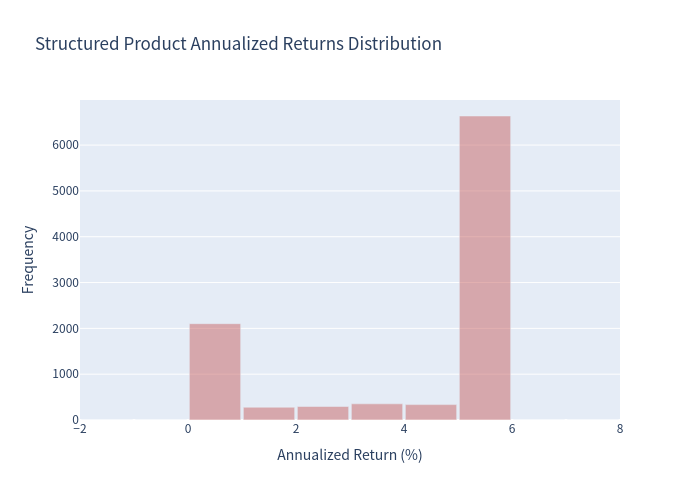
We analyzed a Market-Linked Note linked to the S&P 500 Index with a 17.50% maximum total return cap and full principal protection. Here's what we found:
The Risk-Return Tradeoff
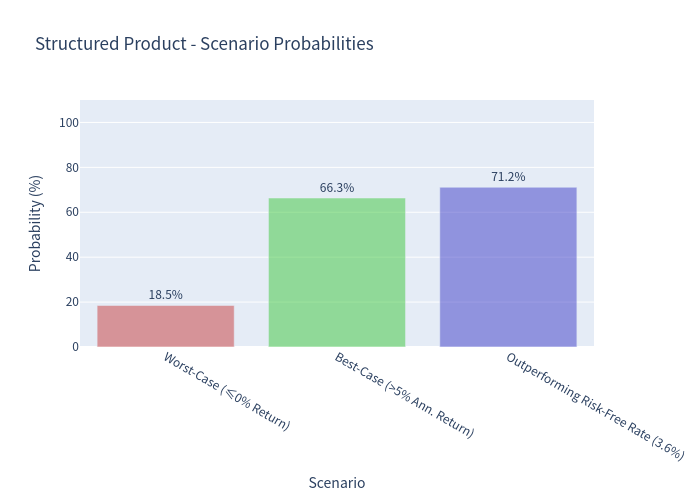
The tradeoff is stark: you give up significant upside potential (11.76% → 4.06%) in exchange for complete downside protection. The note underperforms in strong bull markets but never loses money.
Who Should Consider Market-Linked Notes
Market-Linked Notes are designed for a specific type of investor:
- ✅ Risk-averse investors who can't tolerate principal loss
- ✅ Income investors comparing against 3-5 year bond yields
- ✅ Portfolio diversification — a floor under equities exposure
- ❌ NOT for investors seeking maximum growth
- ❌ NOT for short-term holdings (early redemption penalties apply)
How to Evaluate Any Market-Linked Note
When evaluating a Market-Linked Note, look at four things:
1. The Participation Rate
The percentage of index gains you receive (e.g., 100% means you match the index, 120% means you get 1.2x, 80% means partial participation). Higher is better.
2. The Cap
The maximum return you can achieve. A 17.50% cap over a 5-year term means ~3.3% annualized maximum. Compare this to the underlying index's historical average.
3. The Barrier
Most MLNs don't have barriers, but some "contingent protection" MLNs do. If the barrier is breached, you may lose some or all of your principal protection.
4. Issuer Credit Quality
Your principal protection is only as good as the issuer. Check their credit rating — the note is an unsecured obligation of the issuer.
Key Takeaway
Market-Linked Notes offer genuine principal protection but at a significant cost: you cap your upside well below what the underlying index delivers on average. They work best as a bond alternative, not an equity replacement.
Compare the expected annualized return (4.06%) to a comparable-maturity corporate bond. If the bond offers a better risk-adjusted return, the note may not be worth the complexity.
Upload a Market-Linked Note term sheet → Token Engine's SP Evaluator calculates expected return, VaR, and loss probability for any structured product.