PPNs · capital protection certificates
Principal Protected Note Analysis Tool
Principal protection is not free. It is bought with capped upside, no income, or a longer term. Speval quantifies the trade-off so the protection level can be judged against its cost.
No login required · Independent, issuer-neutral analysis
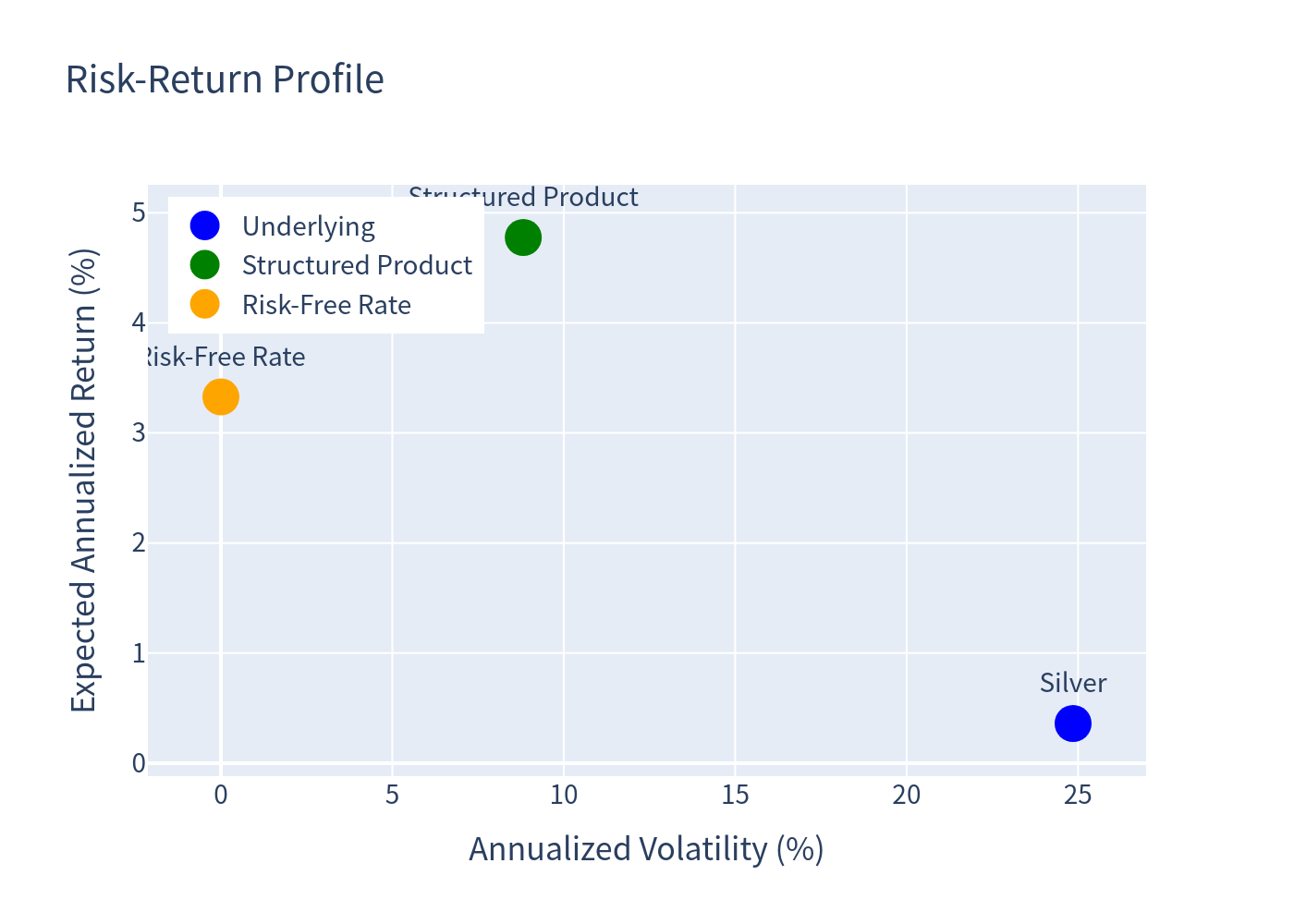
Chart from a real Speval analysis report.
Example principal protected note analysis
95%
Capital protection
5% at risk
4.78%
Expected annualized return
2-year term
53.56%
Probability of negative return
Below threshold
140%
Upside cap
100% participation
A principal protected note (PPN) promises to return at least a stated percentage of principal at maturity. The issuer puts most of the proceeds into a bond or deposit and uses the remainder to buy optionality on an underlying. The investor gets downside protection in exchange for lower upside, no income, a longer term, or all three.
Protection is real, but it is not free. A principal protected note analysis tool should show what the protection costs: the participation rate, the cap, the opportunity cost, the issuer credit exposure, and the probability that the investor earns nothing beyond principal.
What is a principal protected note?
A PPN typically has:
- A protection level. Usually 100% of principal, sometimes 95% or 90%.
- A participation feature. The investor receives a percentage of the underlying's positive performance, sometimes with a cap.
- A term. Often three to seven years, because a longer term makes the bond component cheaper.
- An issuer. The protection is an unsecured obligation of the issuer, not a deposit insurance promise (unless the note is a bank CD).
The structure is a zero-coupon bond plus a call option. The bond funds the protection; the option provides the upside. The participation rate and cap tell you how much option the issuer could afford.
The protection trade-off
Every PPN trades something for protection:
| What is given up | How it shows up |
|---|---|
| Upside | A participation rate below 100%, or a cap |
| Income | No coupons, or a below-market coupon |
| Liquidity | A multi-year term with limited secondary market |
| Inflation | Nominal principal returned, not inflation-adjusted |
| Credit quality | The issuer's credit risk is embedded in the note |
A PPN can be appropriate for an investor who values the principal floor more than the forgone upside. It is not appropriate if the investor needs income, liquidity, or inflation protection.
Worked example: Capital Protection Certificate with Participation on Silver
Speval's example report analyzes a two-year capital protection certificate linked to silver. The note protects 95% of principal, offers 100% participation in silver appreciation up to a 140% cap, has a single observation at maturity, and pays no coupons.
The simulation produced:
- 4.78% expected annualized return — versus 0.36% for silver and 3.33% for the risk-free rate.
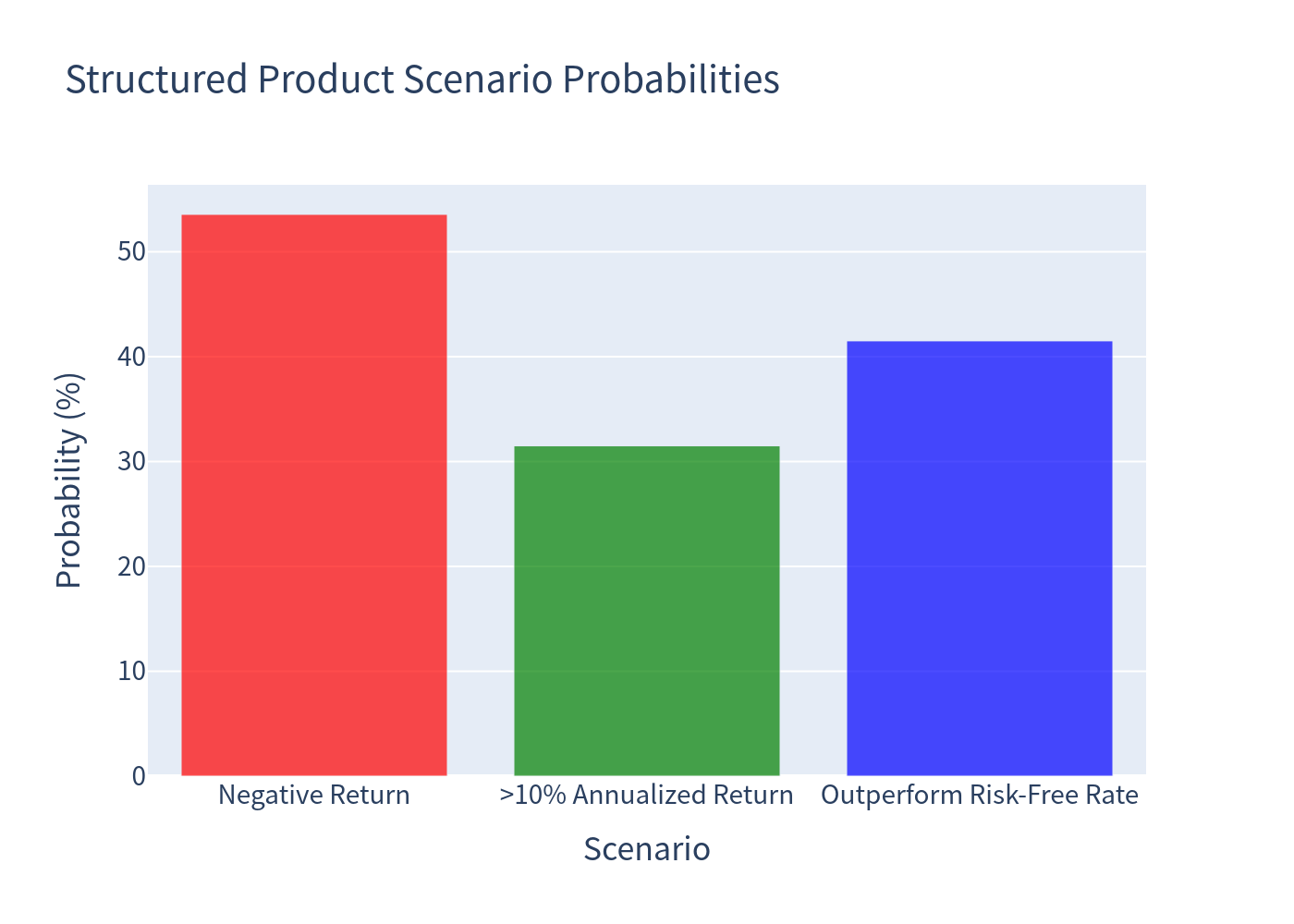
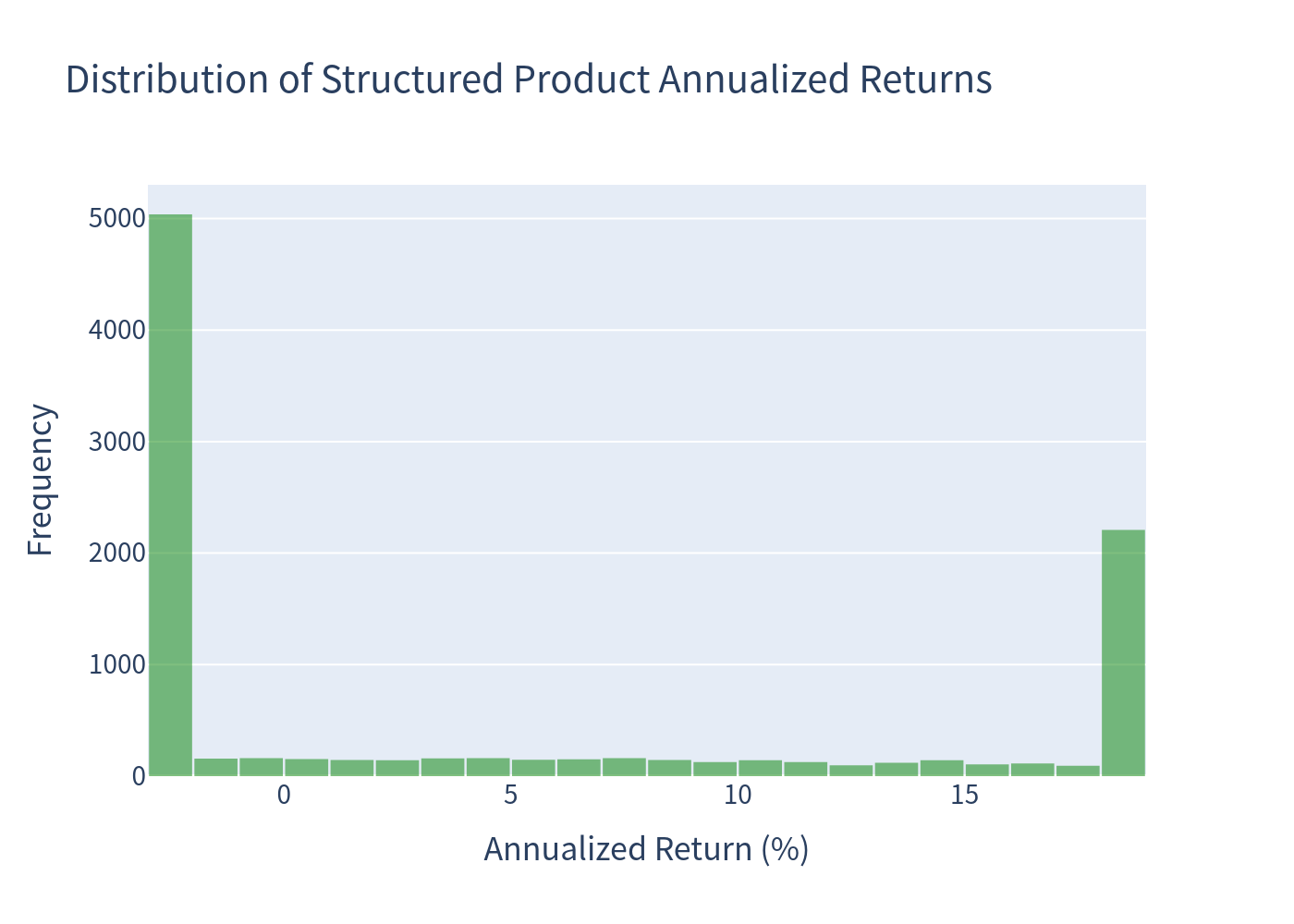
- 53.56% probability of a negative return — the same as the probability that silver finishes below the 95% strike.
- -2.53% 99% VaR — the protected structure cuts the tail loss from -46.30% for silver.
- 10.56% expected total return over the two-year term.
- 8.82% expected volatility — versus 24.86% for silver.
The high probability of a negative return is not a contradiction. The note protects 95% of principal, but any outcome below the 95% strike produces a small loss. Protection limits the size of the loss, not the frequency of a loss.
Why probability of loss can be high even with protection
A 95% protected note loses money whenever the underlying finishes below the 95% strike, even if the loss is small. If the underlying is volatile and the term is short, that can happen in more than half of the simulated paths. The protection does its job by limiting the loss to 5%, not by eliminating losses.
This is why comparing a PPN on probability of loss alone is misleading. Compare it on loss severity, expected return, and the 99% VaR.
PPN vs buffered note vs market-linked CD
- PPN. Usually 100% protection; upside through participation, often capped; issuer credit risk.
- Buffered note. Protects the first slice of a decline (for example, the first 15%); losses beyond the buffer are passed through; usually more upside than a PPN.
- Market-linked CD. A bank deposit with market-linked returns; may have deposit insurance up to applicable limits, but the market-linked return is often capped or participation-limited.
The right comparison depends on the client's need for protection, liquidity, and income.
What to check in a PPN term sheet
- Protection level. 100%, 95%, or 90%? Is it measured at maturity only?
- Participation rate and cap. Is participation on the price index or total return? Is the cap on the total return or the annual return?
- Term. Longer terms make protection cheaper but increase opportunity cost.
- Issuer credit. The protection is only as good as the issuer.
- Fees. Embedded fees reduce the participation rate and may not be disclosed as a line item.
- Liquidity. Secondary market availability and bid-ask spreads.
- Inflation. Nominal protection may not preserve purchasing power.
Related analysis
- Market-linked notes analysis tool for protected index notes.
- Buffered notes analysis tool for partial protection.
- Structured notes analysis tool for the broader category.
- Structured product calculator for quick coupon and barrier math.
Figures in this article come from a Speval example report and are simulated, not investment advice.
Example principal protected note analysis
Capital Protection Certificate with Participation on Silver
This is a full report generated by Speval from a real term sheet. The same analysis is available for your product — upload the document and get the report in minutes.
Frequently asked questions
What is a principal protected note (PPN)?
A PPN is a structured note that promises to return at least a stated percentage of principal at maturity, usually 100%. The issuer invests the bulk of the proceeds in a bond or deposit and uses the remainder to buy optionality on an underlying.
Is principal protection guaranteed?
Protection is only as good as the issuer. A PPN is an unsecured obligation of the issuer, so issuer credit risk remains. Read the protection language: some notes protect 100% of principal, others 95% or 90%.
How do you analyze a PPN?
Compare the protected amount, participation rate, cap, term, and issuer credit spread against the underlying's distribution. The key question is whether the participation and cap compensate for forgone income and the opportunity cost of the term.
Why can a principal protected note have a negative expected return?
Protection is funded by the note's economics. If the participation is low, the cap is tight, or fees are high, the expected return can be below the risk-free rate. Protection limits the downside; it does not guarantee a positive real return.
What is the difference between a PPN and a buffered note?
A PPN typically protects 100% of principal. A buffered note protects only the first slice of a decline (for example, the first 15%), with losses beyond the buffer passed through to the investor.
Does principal protection cover inflation?
Usually not. Most PPNs return nominal principal, so inflation erodes the real value over the term. The analysis should include the risk-free rate and the opportunity cost of the holding period.
Related analysis tools
Further reading
Run this analysis on your own term sheet
Upload a PDF, Excel, or Word term sheet. Speval extracts the terms, runs 10,000 Monte Carlo paths, and returns autocall probability, probability of loss, expected return, and scenario charts.