What's the Probability of Loss from an Autocallable Note?
What's the Probability of Loss from an Autocallable Note?
Autocallable structured notes with coupons in the 10%+ range are popular with income-seeking investors. But what's the actual probability that you'll lose money?
We analyzed a real 10.75% p.a. CHF Autocall Barrier Reverse Convertible linked to Bayer, EMS-CHEMIE, and Lonza (worst-of structure) to answer that question.
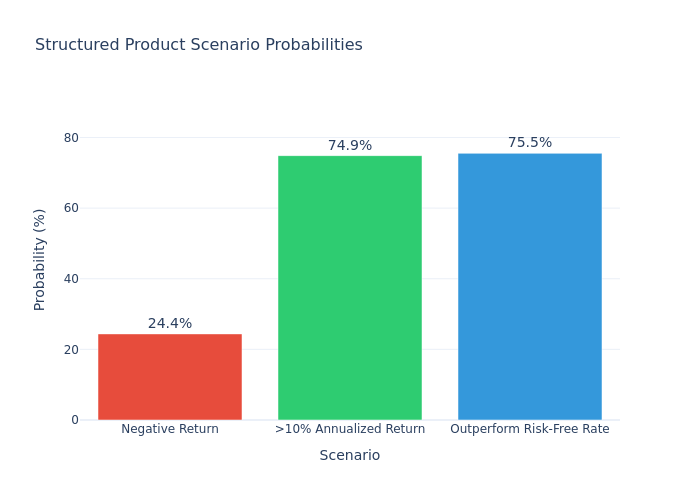
The Probability of Loss: 21.3%
After running a Monte Carlo simulation with 50,000 paths, the probability of a negative total return was 21.3%. That's roughly 1 in 5 — meaning in one out of every five simulated market scenarios, an investor would have ended with less than their initial investment.
Why the Risk Exists
Despite a 10.75% annual coupon, the product carries several risks that can result in losses:
- Barrier risk. If any of the three underlyings falls below the barrier level on an observation date, the conditional protection is lost.
- Worst-of structure. The product tracks the worst-performing of Bayer, EMS-CHEMIE, and Lonza — all three must stay above their barriers for full protection.
- Loss of coupons. In barrier-breach scenarios, not only is principal at risk, but future coupon payments stop as well.
Expected Return vs. Headline Coupon
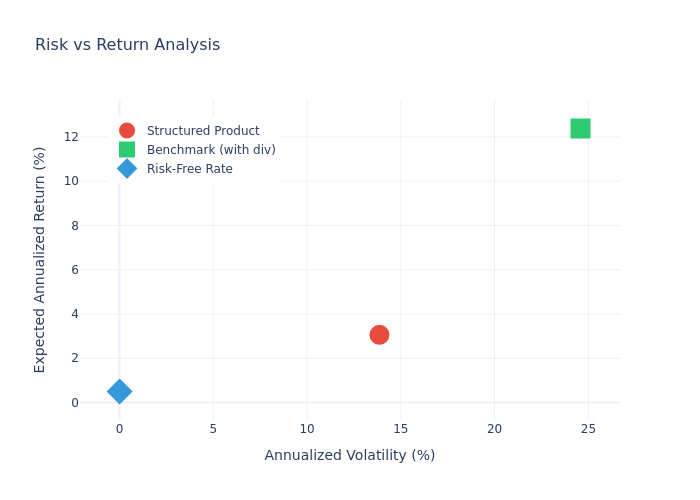
The headline coupon is 10.75% p.a., but the expected annualized return after simulation is only 3.06%. That's a 7.69 percentage point gap — and understanding why is crucial.
The gap exists because:
- In good scenarios, the product autocalls early, capping total return
- In moderate scenarios, coupons may be missed during periods when underlyings dip below the barrier
- In bad scenarios, investors lose both coupons and principal
- In good scenarios, the product autocalls early, capping total return
- In moderate scenarios, coupons may be missed during periods when underlyings dip below the barrier
- In bad scenarios, investors lose both coupons and principal
How Autocall Probability Affects Returns
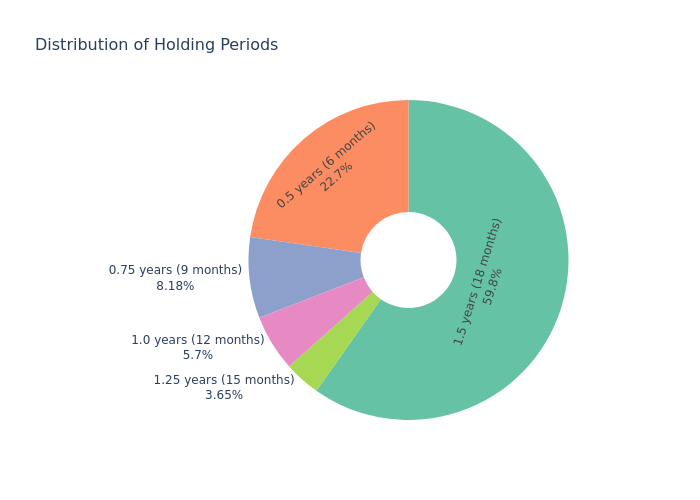
Our simulation found a ~35% probability that the product gets called early in the first year alone. Early call means you receive your coupon plus principal back, but lose the opportunity to earn future coupons — reducing total return vs. holding to full maturity.
Key Takeaway
An autocallable with a 10.75% coupon has a ~1 in 5 chance of losing money. The expected return is far below the headline coupon. Always run a simulation to understand the real probability distribution — not just the best-case scenario.
Run a full Monte Carlo simulation on any autocallable note with Token Engine's SP Evaluator. See the true probability of loss before you invest.