Bonus certificates · outperformance
Bonus Certificate Analysis Tool
A bonus certificate pays a defined bonus if a barrier holds, and can pay nothing extra if it does not. The analysis is about the barrier's real breach probability, not the headline participation rate.
No login required · Independent, issuer-neutral analysis
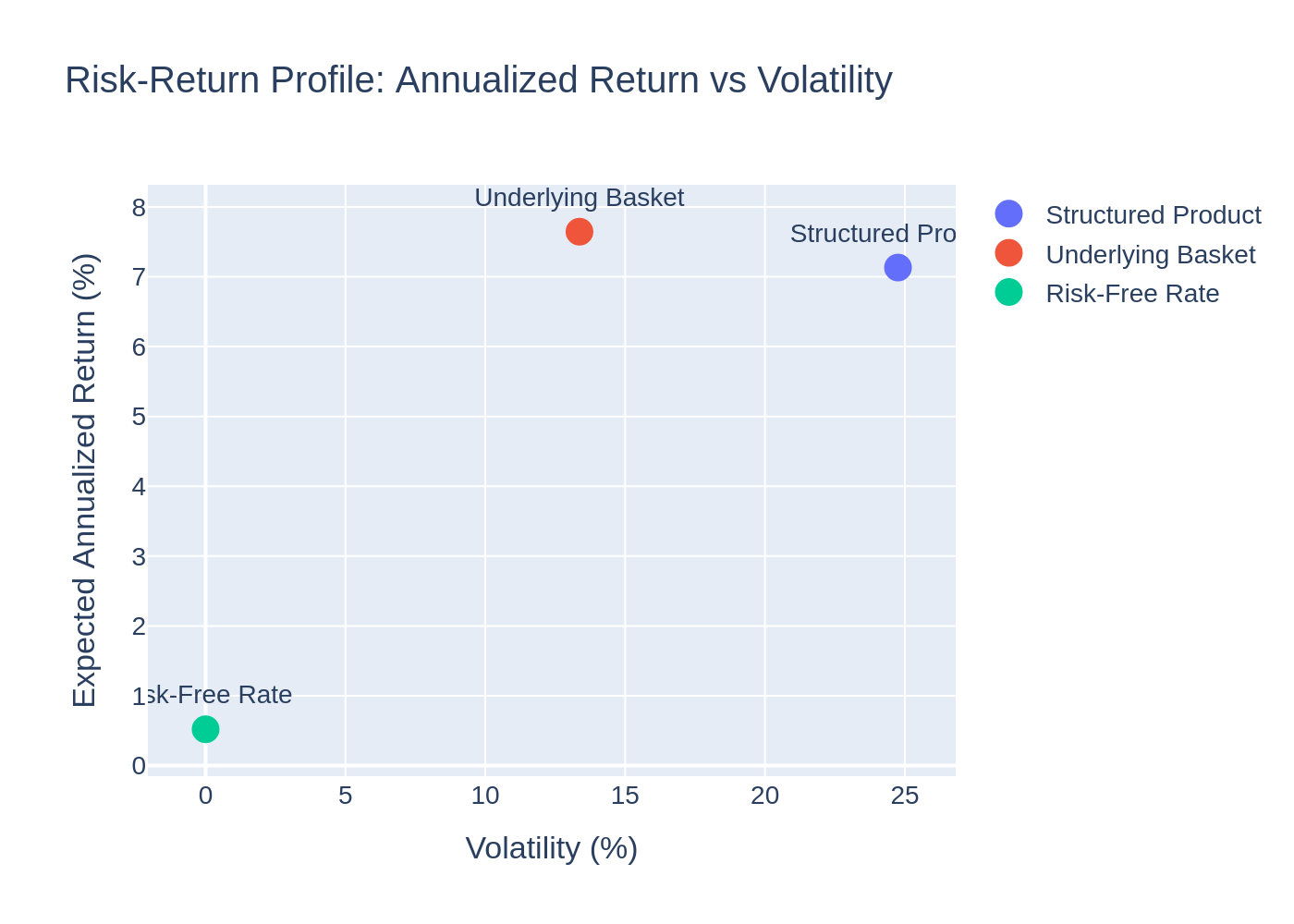
Chart from a real Speval analysis report.
Example bonus certificate analysis
175%
Upside participation
Uncapped above 100%
7.13%
Expected annualized return
2-year term
23.35%
Probability of negative return
Simulated
55%
Continuous barrier
Any basket member
A bonus certificate pays a defined bonus at maturity if a barrier holds. If the barrier is breached, the payoff typically reverts to the underlying — and the bonus disappears. The certificate is a bet on the barrier, dressed up as a bet on the bonus.
A bonus certificate analysis tool should show the barrier breach probability, the loss distribution if the barrier is hit, and whether the bonus compensates for the risk.
What is a bonus certificate?
A bonus certificate usually has:
- A bonus level. The amount paid at maturity if the barrier is not breached, often expressed as a percentage of the initial price.
- A barrier. A level that, if breached, removes the bonus and can expose the investor to the underlying's decline.
- A participation feature. Some certificates add leveraged participation above the initial level; these are called bonus outperformance certificates.
- A term. Typically one to three years.
- A worst-of feature. Many bonus certificates are linked to a basket and pay based on the worst-performing member.
If the barrier holds, the investor may receive the bonus even if the underlying finishes below its initial level. If the barrier is breached, the certificate behaves more like a direct investment in the underlying, with the worst-of feature potentially amplifying the loss.
Bonus outperformance mechanics
A bonus outperformance certificate combines two features:
- The bonus. A defined payoff if the barrier holds.
- Leveraged participation. A multiple of the upside above the initial level, sometimes uncapped.
The investor gives up some downside protection for the leveraged upside. The barrier is the line between the two regimes.
Worked example: Leonteq Bonus Outperformance Certificate on a Swiss Fallen Angels Basket
Speval's example report analyzes a two-year Leonteq bonus outperformance certificate on an equal-weighted basket of five Swiss stocks: Alcon, Givaudan, Partners Group, Sika, and Sonova. The certificate offers 175% participation in basket performance above 100%, full principal protection if no barrier event occurs, and a continuous 55% barrier on each stock. If any stock breaches the barrier, the payoff switches to the worst-performing stock's return.
The simulation produced:
- 7.13% expected annualized return — slightly below the basket's 7.64%.
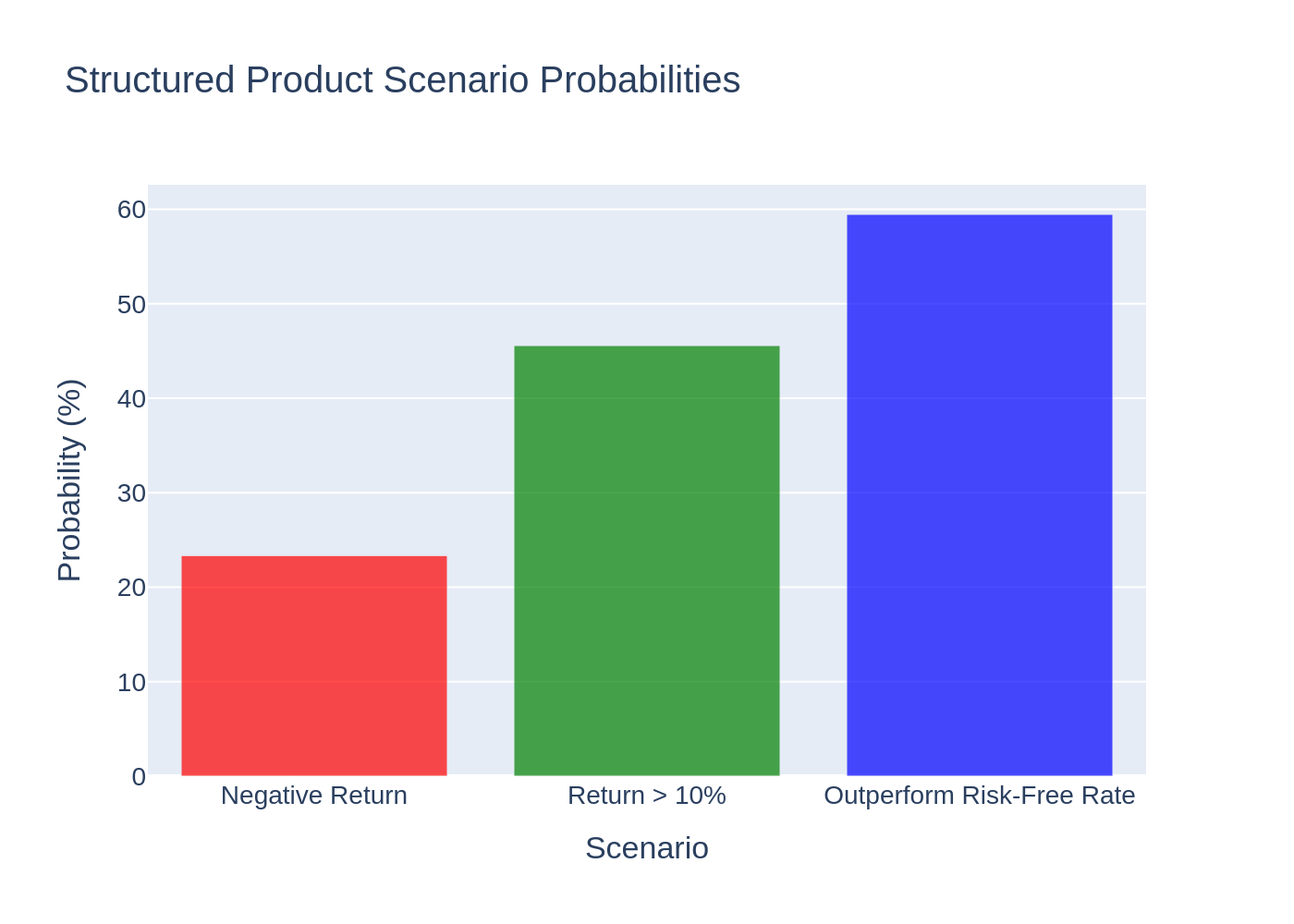
- 23.35% probability of a negative return — versus 29.22% for the basket.
- 24.76% annualized volatility — versus 13.37% for the basket.
- -42.78% 99% VaR — versus -20.62% for the basket.
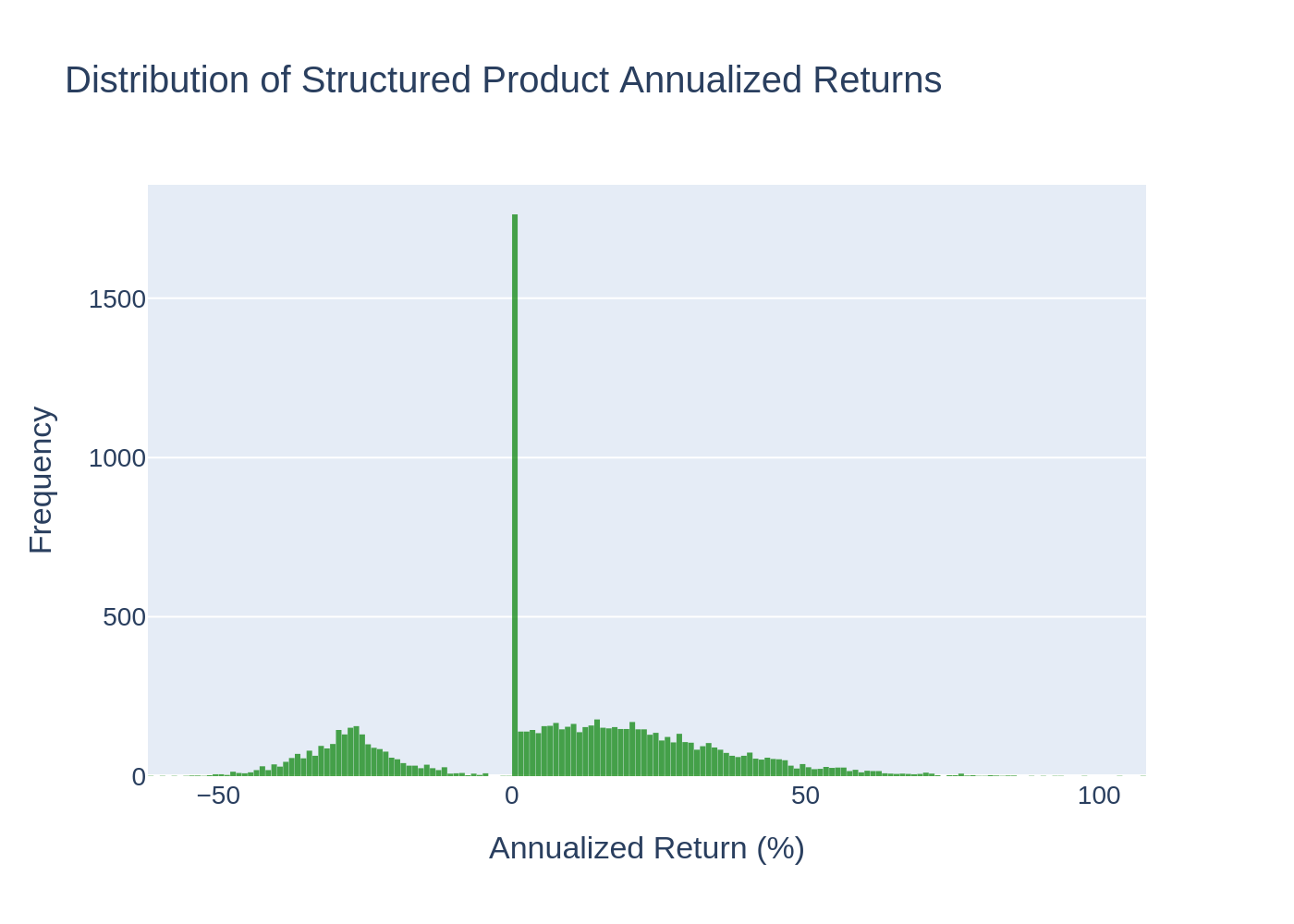
- 23.43% barrier trigger probability — nearly one in four paths.
The trade-off is clear: the certificate has a slightly lower probability of a negative return, but a much worse tail. The barrier converts the payoff to the worst-performing stock, which is why the 99% VaR is more than double the basket's.
Why the barrier matters more than the bonus
The bonus is only paid if the barrier holds. A 175% participation rate or a large bonus looks attractive, but it is conditional on a path-dependent event. The analysis should show:
- Barrier breach probability. How often the barrier is hit.
- Loss severity if breached. What the worst-of payoff does in those paths.
- Bonus capture probability. How often the investor actually receives the bonus.
- Expected return and 99% VaR. The combined effect of the two regimes.
A certificate with a high bonus and a high barrier breach probability can have a worse expected return than a simpler structure with a lower bonus.
Bonus certificate vs worst-of note
Both can be basket-linked and both can have a worst-of feature. The difference is the payoff:
- Bonus certificate. Pays a defined bonus if the barrier holds; the bonus is the central feature.
- Worst-of note. The payoff is based on the worst-performing name, often with a coupon and a barrier.
Many bonus certificates are effectively worst-of structures with a bonus attached. The analysis should apply the exact payoff rules, not the label.
What to check in a bonus certificate term sheet
- Barrier level and observation style. Continuous barriers trigger more often than closing-price barriers.
- Bonus level and participation. Is the bonus paid in addition to principal, or is it the total return?
- Worst-of definition. Is the payoff based on the worst stock at maturity, or throughout?
- Upside participation and cap. Is the participation above 100% capped?
- Principal protection. Is principal protected if the barrier holds, or only the bonus?
- Issuer credit and currency. The certificate is an unsecured obligation.
Related analysis
- Worst-of notes analysis tool for basket-linked structures.
- Buffered notes analysis tool for partial protection.
- Structured notes analysis tool for the broader category.
- Structured product calculator for quick coupon and barrier math.
Figures in this article come from a Speval example report and are simulated, not investment advice.
Example bonus certificate analysis
Leonteq Bonus Outperformance Certificate on a Swiss Fallen Angels Basket
This is a full report generated by Speval from a real term sheet. The same analysis is available for your product — upload the document and get the report in minutes.
Frequently asked questions
What is a bonus certificate?
A bonus certificate pays a bonus amount at maturity if a barrier is not breached. If the barrier holds but the underlying finishes below the initial level, the investor may still receive the bonus or principal; if the barrier is breached, the payoff typically reverts to the underlying.
What is a bonus outperformance certificate?
It combines a bonus feature with leveraged participation above the initial level. The investor gets the bonus if the barrier holds, plus a multiple of the upside if the underlying rises.
How do you analyze a bonus certificate?
Model the barrier observation style, the bonus level, the participation rate, and the worst-of feature if the certificate is basket-linked. Report barrier breach probability, probability of loss, expected return, and the distribution of outcomes.
Why is a continuous barrier riskier than a closing-price barrier?
A continuous barrier can be breached intraday, even if the underlying recovers by the close. That increases the chance of a barrier event and can turn an otherwise positive outcome into a loss.
Can a bonus certificate lose principal?
Yes, if the barrier is breached and the underlying finishes below its initial level. The certificate is not principal protected in that scenario.
What is a 'fallen angels' basket?
It is a basket of established companies whose shares have fallen significantly. The certificates are often structured to offer a high bonus or participation rate in exchange for barrier risk on names that may continue to be volatile.
Related analysis tools
Further reading
Run this analysis on your own term sheet
Upload a PDF, Excel, or Word term sheet. Speval extracts the terms, runs 10,000 Monte Carlo paths, and returns autocall probability, probability of loss, expected return, and scenario charts.